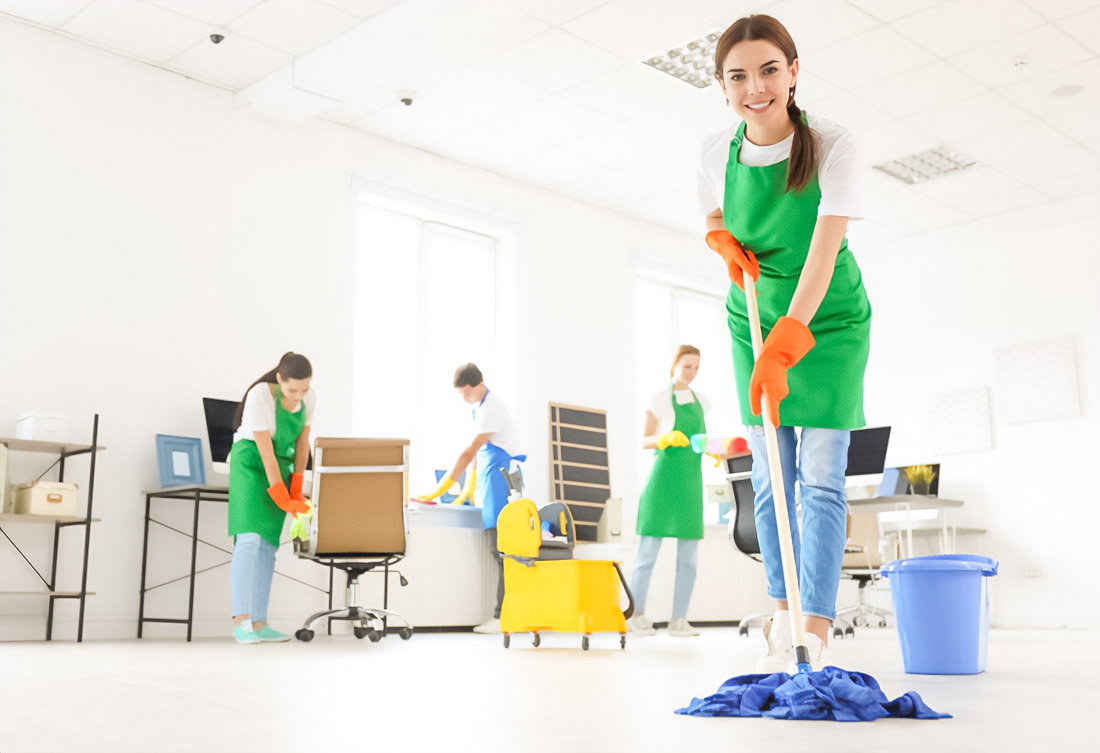

Office cleanliness doesn’t end with shiny desks. It begins where the eyes rarely look. After the repair, the air fills with dust, paint particles settle on the keyboards, and ventilation pulls deeper and deeper, where it is difficult to reach later. It would seem that the room looks renovated, but there is chaos hiding under the surface. Therefore, deep cleaning is not an option, it is an obligatory part of restoring the working rhythm.
Why Deep Cleaning Affects Health and Productivity

Office cleanliness doesn’t end with shiny desks. It begins where the eyes rarely look. After the repair, the air fills with dust, paint particles settle on the keyboards, and ventilation pulls deeper and deeper, where it is difficult to reach later. It would seem that the room looks renovated, but there is chaos hiding under the surface. Therefore, deep cleaning is not an option, it is an obligatory part of restoring the working rhythm.
Deep cleaning is more than cleaning carpets and wiping tables. It is a system that covers everything: high-touch areas, ventilation, carpets, furniture, appliances. When the office goes through the deep cleaning routine, employees feel the result literally in the air. Research shows that in carefully cleaned rooms concentration increases by 15%, and job satisfaction increases by 22%. Heaviness goes away, fatigue decreases, and motivation returns.
The air becomes lighter and easier to breathe. The number of errors in tasks decreases by 7%, completed projects increase by 9%. Even health indicators are changing: respiratory complaints are 23% less, skin irritations are 18% less. Three days of sick leave per year is what one employee saves if the company implements a deep cleaning program.
There is also a psychological effect. When the space is clean, order is felt at the level of perception. People get less irritated and concentrate faster. The unpleasant smell goes away, and the office seems to start breathing. All this turns into trust, because 64% of visitors form an opinion about the company in the first minute after logging in.
How to Build a Cleaning System: Discipline, Checklists, and Control

Supporting workplace hygiene means following a clear plan. Without structure, everything quickly returns to chaos. Therefore, it is necessary to implement a cleaning schedule with separation by frequency and zones.
Daily cleaning daily care. Knobs, switches, keyboards, kitchens, bathrooms everything that is touched most often. These zones are the epicenters of microbes, they should not be missed.
Weekly cleaning goes deeper: polishing furniture, cleaning office equipment, cleaning glass partitions, ventilation grilles.
Monthly deep cleaning is the moment when they take out everything that has accumulated: HVAC systems, filters, carpets, hard-to-reach corners.
These three levels create a cycle. It extends the service life of office items by 30-40%, reduces repair and replacement costs.
Modern companies use cleaning SOPs(Standard Operating Procedures) instructions that turn cleaning into a manageable process. They contain everything from frequency to methods. And digital tools like GoAudits and CheckPoint help create digital cleaning checklists, where you can see what is done and what is not. Cleaning audits and task compliance make the process transparent.
Many professional office cleaning companies already follow such SOPs which ensures consistency and measurable quality. When the staff knows that cleanliness is being monitored, there is respect for space. It forms a habit to leave a better place than you found.
Ecology, Sustainability and Clean air as Part of the Strategy

Modern offices look beyond just order. They rely on eco-friendly cleaning, waste management and sustainability. The paper is sent to recycling, the garbage is separated (waste segregation), sustainable materials and energy-efficient systems are used.
Cleaning filters, proper ventilation, indoor air quality control all this reduces the amount of pollutants. The air becomes cleaner, and it is immediately felt: fewer allergies, less fatigue, more energy.
Special attention should be paid to spring cleaning seasonal general cleaning. Its cost usually does not exceed 0.3% of annual expenses, but the service life of furniture and coverings increases by up to 40%. Professional equipment removes up to 95% of impurities, while conventional equipment can only handle 60–70%. The difference is visible literally every other day.
Office cleanliness creates an atmosphere of trust, improves workplace wellbeing and makes work predictably comfortable. When the space is safe, fresh and organized, the business breathes smoothly.
Deep cleaning is not just about cleaning. It’s a strategy. It is part of corporate responsibility. It combines safety, productivity and ecology. It protects health and increases loyalty. Deep cleaning checklists and cleaning SOPs create a system that runs smoothly. In a clean office, the air moves freely, ideas are born faster, and employees return to work with desire rather than obligation.